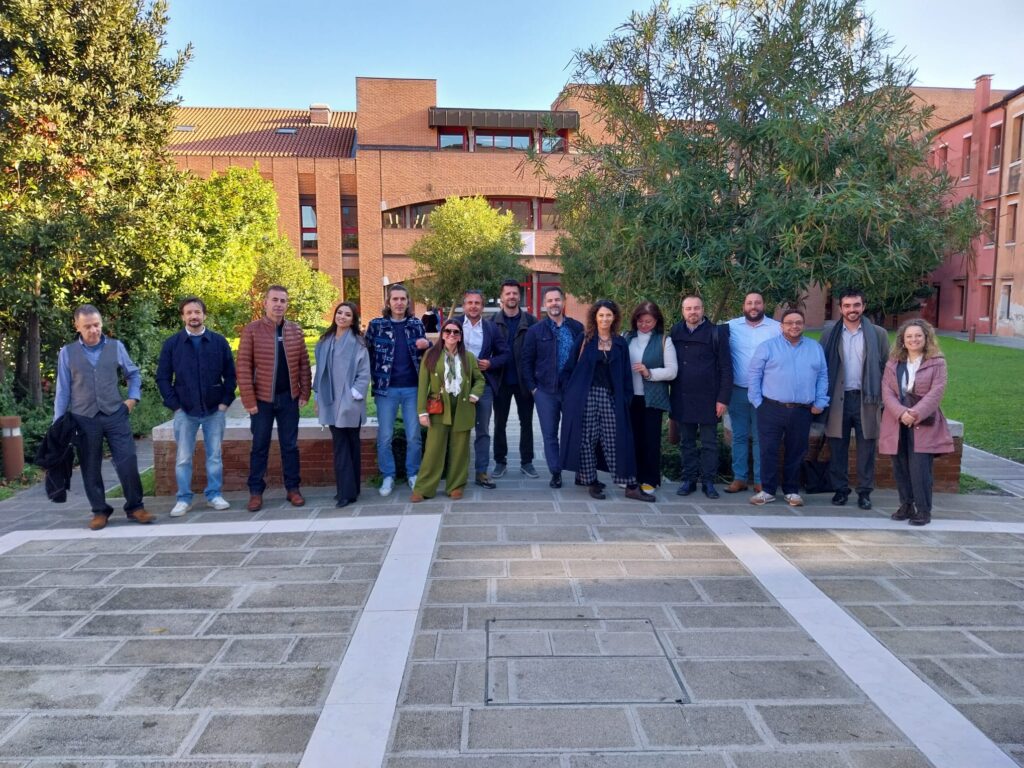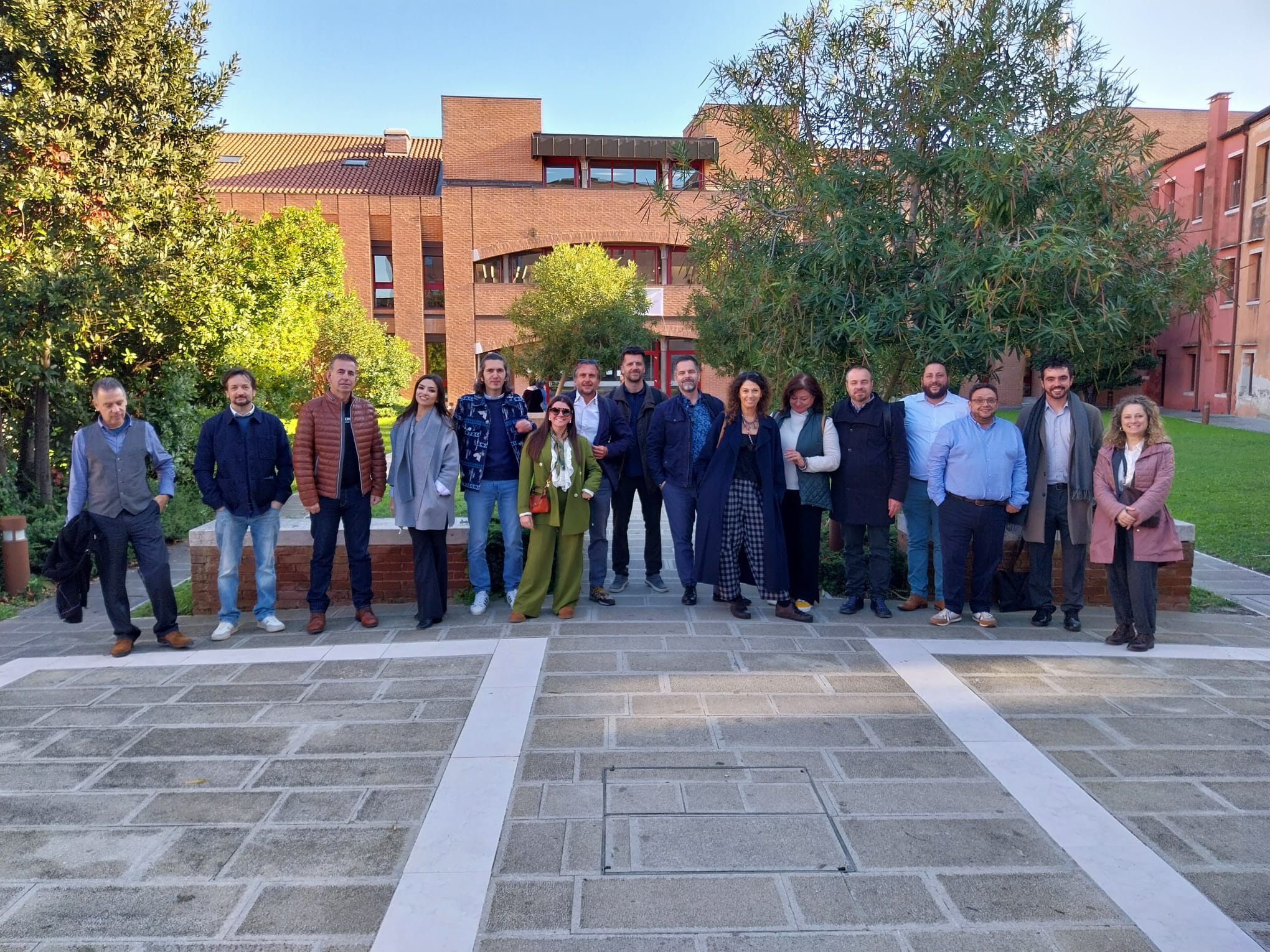

The consortium partners gathered on November 4th at Ca’ Foscari University of Venice for a full-day Consortium Meeting focused on advancing collaborative research and planning activities within the project framework.
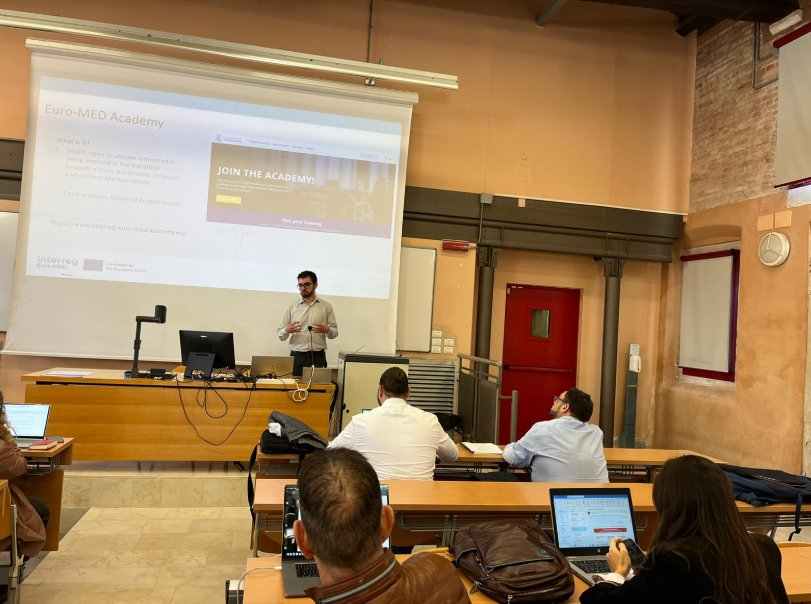
The event, hosted by the Department of Economics, featured presentations, discussions, and interactive workshops designed to strengthen cooperation among partners and refine project strategies.
The day opened with a registration session followed by welcoming remarks from Nicola Camatti of Ca’ Foscari University of Venice, Department of Economics, who officially inaugurated the meeting and set the tone for the day’s discussions.
Pilot Area Descriptions and Data Gathering Process
Emma Magistri then presented the Pilot Area descriptions and Data Gathering Process, providing insights into field data collection and methodological approaches. Fascinating and valuable insights emerged from each Destination Group, revealing several common patterns across regions. These early observations suggest that identified obstacles can be reframed as meaningful indicators, underscoring the importance of consistent methodologies and high data quality among all partners
The focus then shifted to the integration of innovation and sustainability, with Hrvoje Caric from the Institute for Tourism in Zagreb presenting on “AI and Sustainable Tourism Planning – Croatian Cases and Developments in the MED Space.”
After a short coffee break, Axel Rodríguez Garrote, Project Officer at the Interreg Euro-MED Joint Secretariat, together with Thibaud Marjin, provided the consortium with valuable guidance on academy initiatives, communication strategies, and financial management. Their input offered crucial clarifications and practical advice to support partners in addressing key project challenges effectively.
This was followed by Nicola Camatti outlining the Project Task and Activity Plan, leading into a Partners’ Round Table moderated by Emma Magistri and Marco Buemi (Ca’ Foscari University of Venice). Partners from Pula, UBBSLA, Murcia, Unione Comuni Tifernum, and Kean shared updates on their current progress and contributed to establishing the Destination Working Group.
World Café–style Workshop
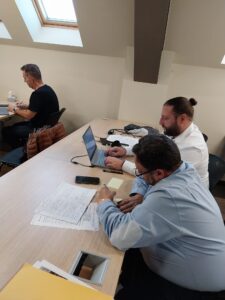 The afternoon featured a World Café–style Workshop, encouraging collaboration and idea exchange through two thematic tables:
- Table 1: How to engage and keep stakeholders motivated and how to run local workshops, moderated by Marco Buemi (Ca’ Foscari Univ
- ersity of Venice).
- Table 2: How to transfer TCCL limits considering tourism subsystems, moderated by Marco Buemi and Emma Magistri (Ca’ Foscari University of Venice).
Following the workshop, the 2nd Steering Committee convened to assess progress along the Transfer Roadmap, discuss next steps, and address communication, financial, and management issues involving all partners.
2nd Steering Committee
Following the workshop, the 2nd Steering Committee convened to assess progress along the Transfer Roadmap, discuss next steps, and address communication, financial, and management issues involving all partners.
The day concluded with a convivial “AperiLab” networking session (17:30–18:50), providing an informal setting for partners to exchange ideas and strengthen professional connections.
Before the Aprilab we had the opportunity to assist a small preview of tomorrow’s Transnational meeting and its innovative approach to dealing with data.