
What we achieve
The project aims to enhance sustainable ecotourism in the Mediterranean by transferring and optimizing The Tourism Carrying Capacity Limit (TCCL) tool in various destinations, where stakeholders collaborate and commit to caring for MED resources, promoting a balanced, sustainable tourism model that protects natural and cultural heritage.
to care med challenges
Ecotourism, defined as responsible travel that supports conservation and local communities, isn’t always sustainable.
In the Mediterranean, a top tourist destination rich in biodiversity, over-tourism, habitat loss, and climate change threaten ecosystems and local livelihoods. High tourist flows, especially in coastal areas, lead to pollution, resource strain, and uneven economic benefits.
Poor management, lack of awareness, and fragmented strategies worsen the problem. To unlock ecotourism’s potential, better coordination, planning, and education are essential for sustainable development and conservation.
Deliverables and Outputs
OUTPUT 1.1
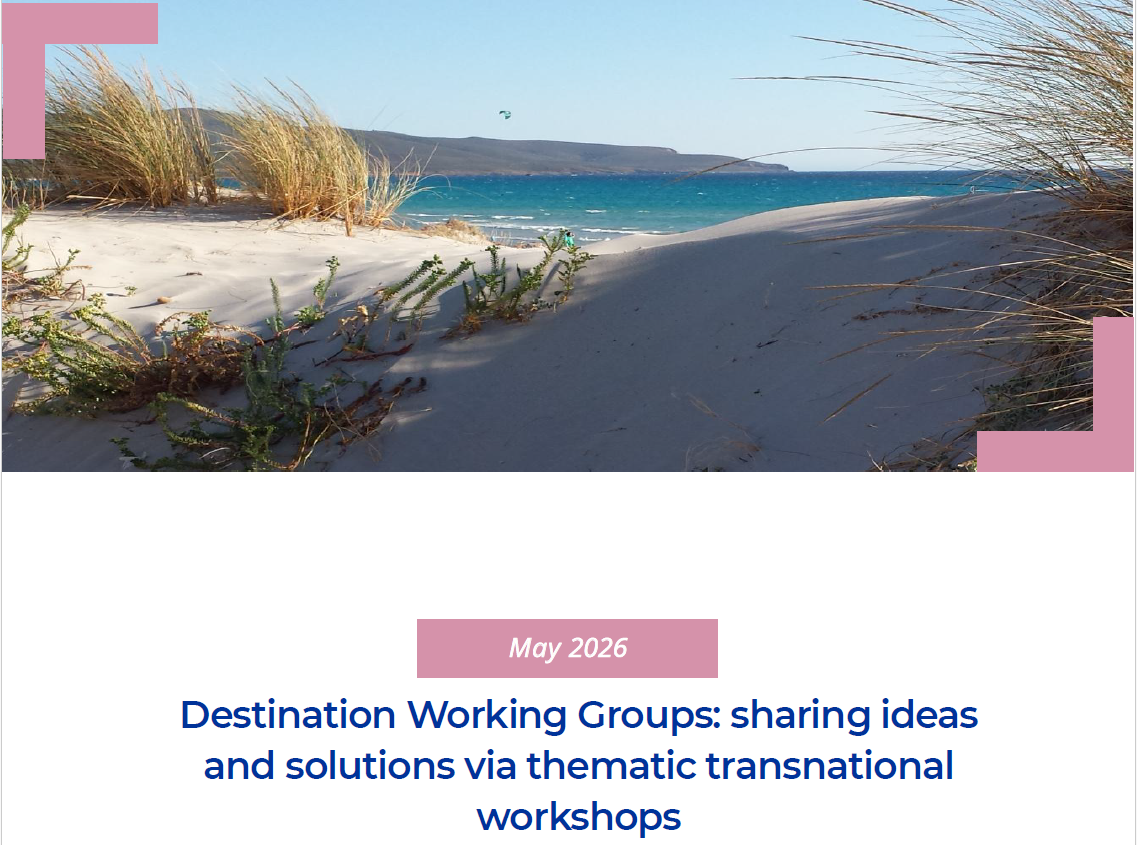
Destination Working Groups sharing ideas and solutions via thematic transnational workshops
The TO CARE MED project serves as a vital framework for transforming Mediterranean tourism from a model of high-volume, seasonal mass consumption into an environmentally resilient, socio-economically balanced ecosystem. By implementing the Tourism Carrying Capacity Limit (TCCL) tool across five distinct pilot destinations—Varna (Bulgaria), Monemvasia (Greece), Tifernum (Italy), Pula (Croatia), and Murcia (Spain)—the initiative establishes a scalable, data-driven governance blueprint.
At its core, this report evaluates how the project’s Destination Working Groups (DWGs) actively facilitate cross-border knowledge exchange, foster intensive MED cooperation, and structurally align regional ecotourism strategies.
The ultimate success of TO CARE MED lies not just in localized environmental interventions, but in its capacity to systematically upgrade the institutional capabilities of participating public authorities, NGOs, and tourism operators.
By converting raw territorial data into actionable policy instruments, the project builds long-term administrative agility, leaving destinations equipped with the frameworks, skills, and transnational networks necessary to protect the Mediterranean’s fragile natural and cultural identity for generations to come.
Follow TO CARE MED for upcoming updates
OUTPUT 1.2
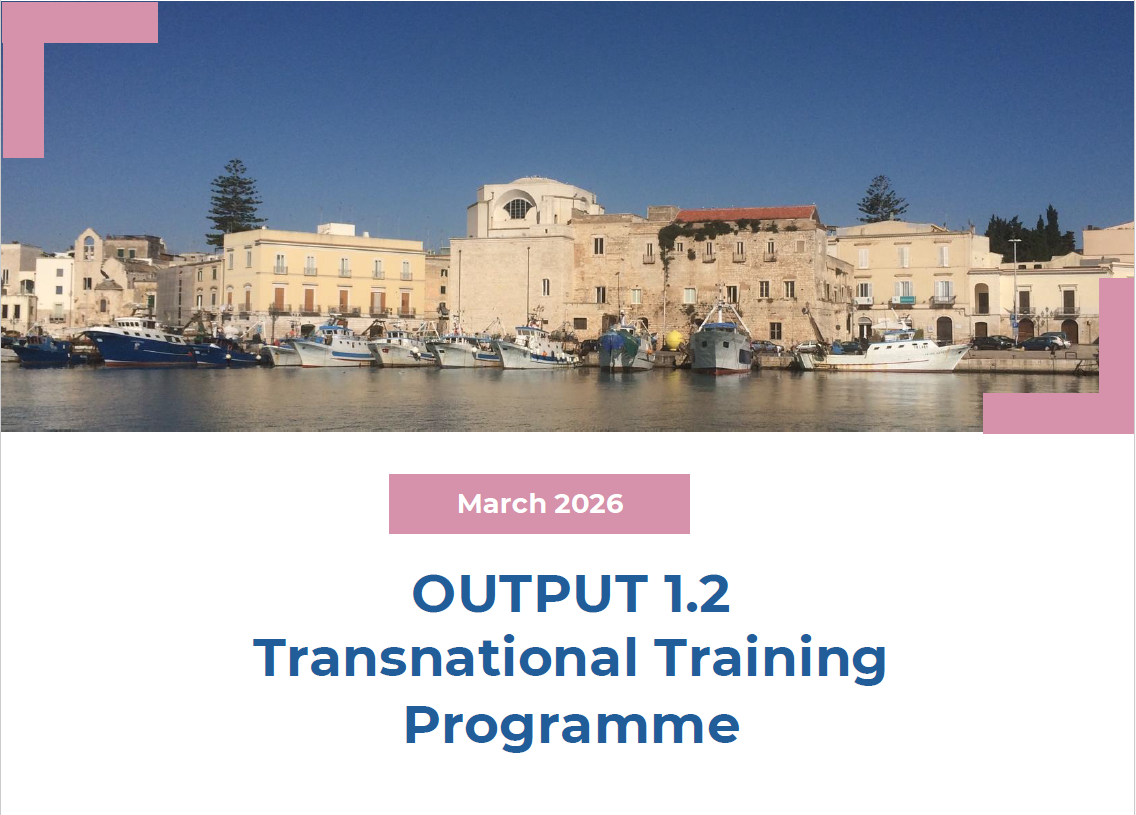
Transnational Training Programs to train trainers and transfer locally the knowledge about ecotourism sustainability and principle of TCCL
The TO CARE MED project presents Output 1.2 – Transnational Training Programme & Workshop Roadmap, a strategic framework aimed at strengthening capacities, shared knowledge, and governance tools for sustainable ecotourism across the Mediterranean. The programme supports destinations in applying the Tourism Carrying Capacity Limit (TCCL) approach through an integrated system of training, peer learning, and participatory governance.
The roadmap is built on a two-level learning architecture that links transnational cooperation with local implementation. At the transnational level, partners exchange methodologies, co-develop analytical tools, and align strategic approaches. At the local level, Destination Working Groups (DWGs) translate this knowledge into context-specific planning processes, testing activities, and Local Action Plans tailored to each territory.
Central to the programme is the optimisation and application of the TCCL tool, combining quantitative and qualitative analysis to assess tourism pressures across environmental, social, cultural, and economic dimensions. The framework introduces the concept of “ecotourism in harmony,” promoting tourism models aligned with local ecological and community dynamics rather than growth-driven approaches.
The roadmap unfolds through a structured sequence of workshops, peer-learning activities, and pilot actions implemented across five Mediterranean destinations. A key feature is the activation of multi-stakeholder DWGs, which foster collaborative governance and contribute to data collection, scenario analysis, and co-design processes.
The programme also incorporates a “right to fail” principle, where pilot actions are evaluated against sustainability thresholds, ensuring that only viable and balanced solutions inform future planning. Beyond the partnership, the output provides transferable tools and guidance for other destinations interested in adopting the methodology.
Overall, Output 1.2 establishes a foundation for long-term capacity building and adaptive governance, supporting more resilient and balanced ecotourism development across the Mediterranean region.
Follow TO CARE MED for upcoming updates
OUTPUT 3.1
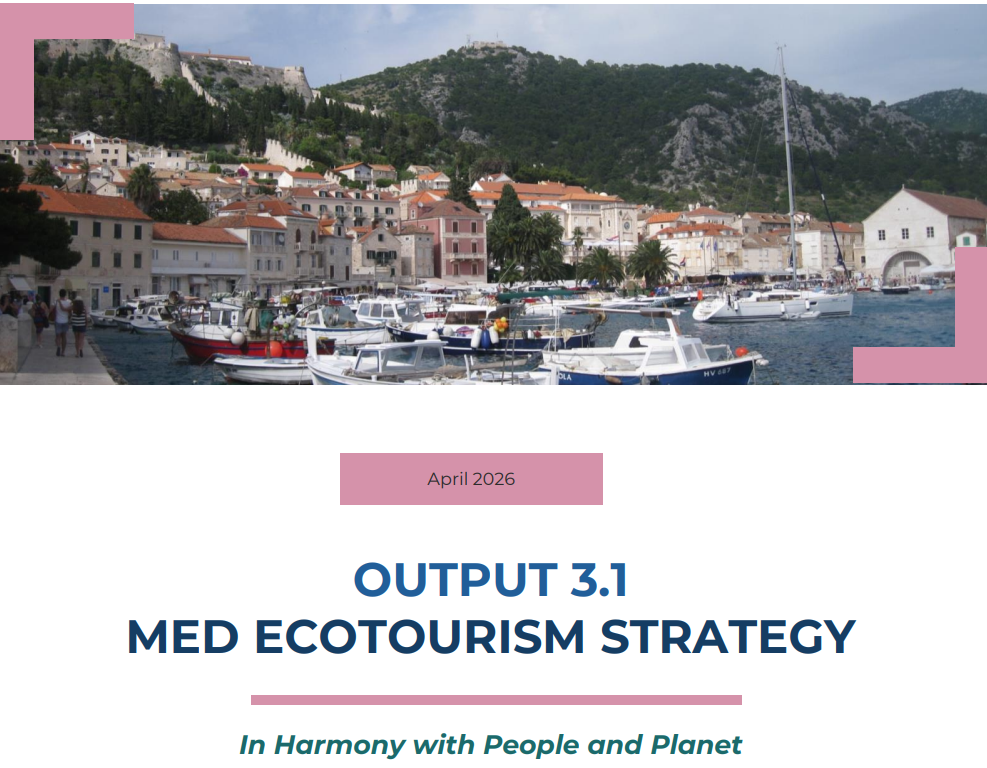
Joint MED Ecotourism Strategy
The TO CARE MED project introduces the Joint Mediterranean Ecotourism Strategy as a shared transnational framework designed to guide tourism development within ecological, social and territorial limits. Co-developed by Mediterranean partners, the strategy moves beyond conventional growth-oriented models and proposes an integrated approach grounded in harmony between tourism flows, local communities and environmental systems.
At its core, the strategy redefines tourism as part of a dynamic living system shaped by seasonal cycles, mobility patterns and community rhythms. It introduces rhythm-based analysis as an innovative planning lens, enabling destinations to identify imbalances such as congestion, environmental pressure or disruption of local life, and to respond through adaptive, scenario-based governance. In this perspective, carrying capacity is not treated as a fixed threshold, but as a fluid condition evolving over time.
The framework outlines shared principles and strategic areas of action aimed at supporting public authorities, protected areas, tourism organisations and local stakeholders in developing Destination Action Plans. These plans will foster pilot initiatives, participatory governance processes and targeted investments aligned with regenerative and place-sensitive tourism models.
By promoting cooperation, peer learning and knowledge exchange across Mediterranean territories, the strategy strengthens the project’s transnational dimension while contributing to policy innovation and local experimentation. Ultimately, it positions tourism not as an external force of pressure, but as a process to be guided toward balance, resilience and long-term territorial wellbeing.
Follow TO CARE MED for upcoming updates
Educational Resources
TO CARE MED Provides Stakeholders with Educational Resources for Sustainable Ecotourism
The TO CARE MED project has released a new set of educational resources supporting stakeholders, destination managers, protected areas, educators and tourism professionals involved in sustainable ecotourism governance across the Mediterranean.
As part of the TCCL training programme (Output 1.2), the project published the “Ecotourism Sustainability Handbook”, a supporting educational resource designed to facilitate the understanding and application of the Tourism Carrying Capacity Limit (TCCL) approach.
The handbook explores key themes including:
- sustainable and regenerative tourism;
- ecotourism governance;
- tourism carrying capacity;
- protected areas management;
- nature-based tourism and wellbeing;
- and integrated governance frameworks for Mediterranean destinations.
The document combines scientific literature, policy approaches and practical guidance to support more balanced and resilient tourism models capable of respecting environmental, social and territorial limits.
These educational resources are the result of the collaborative work carried out by the Expert Working Groups coordinated by Ca’ Foscari University of Venice and CERC Slovenija within the framework of the TO CARE MED project.
The release also includes the first educational video developed by the project to support dissemination and capacity-building activities among Mediterranean destinations.
The TO CARE MED educational package represents another important step in strengthening knowledge transfer, stakeholder engagement and adaptive governance for sustainable ecotourism in the Mediterranean region.
Video Resources
Guidances and Handbooks
D.1.2.1
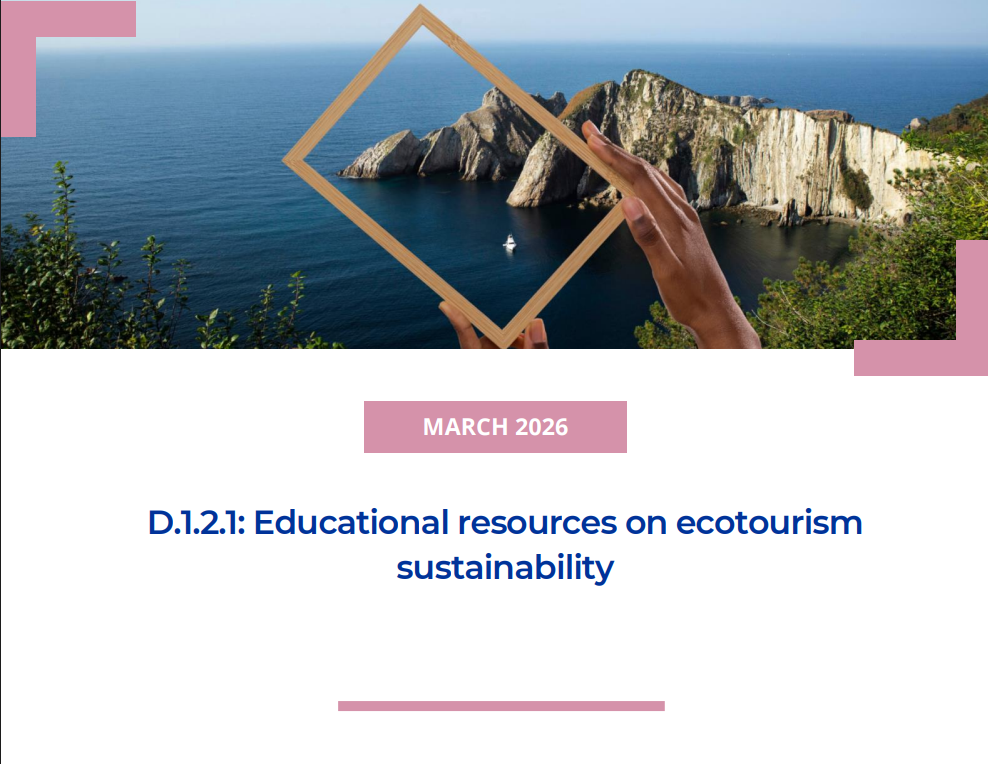
Educational resources on ecotourism sustainability
The To CARE MED project supports Mediterranean ecotourism destinations in addressing over-tourism through the transfer and application of the Tourism Carrying Capacity Limit (TCCL) tool, originally developed under ALTERECO PLUS. Recognizing that many destinations lack effective systems to monitor tourism pressure and coordinate multi-actor governance, the project provides a structured framework for stakeholder engagement and collaborative strategy development based on carrying-capacity principles.
The approach establishes a replicable process for identifying and mobilizing relevant actors and forming Destination Working Groups (DWGs) as core co-creation bodies. Through participatory methods—including workshops, focus groups and joint data collection—DWGs generate evidence-based actions aligned with local needs, while validation processes ensure broad stakeholder consensus and strengthen strategic legitimacy.
Complementing local engagement, the project integrates a strong transnational dimension through thematic workshops, peer learning activities, study visits and methodological exchanges. These mechanisms support knowledge transfer, harmonize TCCL implementation and enhance capacities for sustainable tourism management across Mediterranean regions.
Long-term sustainability is reinforced through formal cooperation tools, including local Memoranda of Understanding and a shared Transnational Declaration of Commitment, ensuring continued collaboration, coordinated governance and the promotion of ecotourism at the MED scale.
Follow TO CARE MED for upcoming updates
D. 1.1.1
Guidelines for the formation and operations of Destination Working Group DWG
TO CARE MED Launches New Guidance to Strengthen Stakeholder Engagement for Sustainable Tourism in the Mediterranean
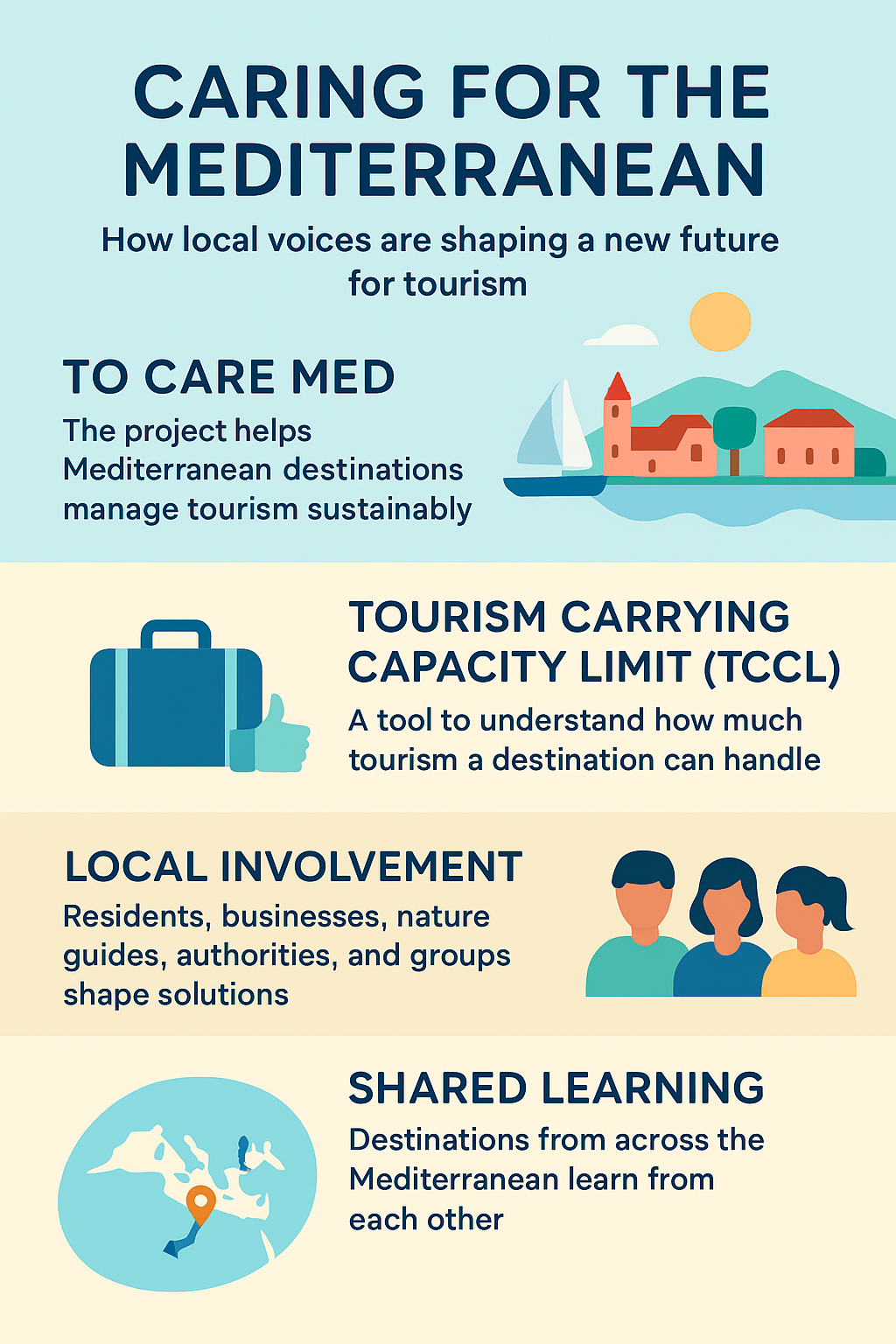
The TO CARE MED project has released a new Stakeholder Engagement and Cooperation Guidance, offering Mediterranean destinations a practical roadmap to involve local actors in shaping more sustainable tourism models.
As many coastal areas face growing pressure from over-tourism, the guidance helps partners adopt the Tourism Carrying Capacity Limit (TCCL) tool and embed it into local governance. The document outlines a structured six-step process to identify key stakeholders, activate participation, and co-create solutions that respect environmental and social limits.
A central feature of the guidance is the creation of Destination Working Groups (DWGs)—multi-sector teams bringing together public authorities, tourism operators, environmental groups, researchers, and community representatives. These groups collaborate through workshops, consultations, and data-collection sessions to produce evidence-based action plans.
The guidance also highlights TO CARE MED’s strong transnational cooperation dimension, including peer learning, thematic workshops, and study visits that enable partners across the Mediterranean to share experiences and refine methodologies.
To ensure long-term impact, the document introduces two formal cooperation tools:
- Local Memorandums of Understanding, securing on-going collaboration among DWG members;
- A Transnational Declaration of Commitment, uniting partners around shared principles for sustainable ecotourism governance.
By providing this framework, TO CARE MED supports destinations in managing tourism within ecological and social limits, fostering resilient, community-driven approaches for the future of Mediterranean ecotourism.