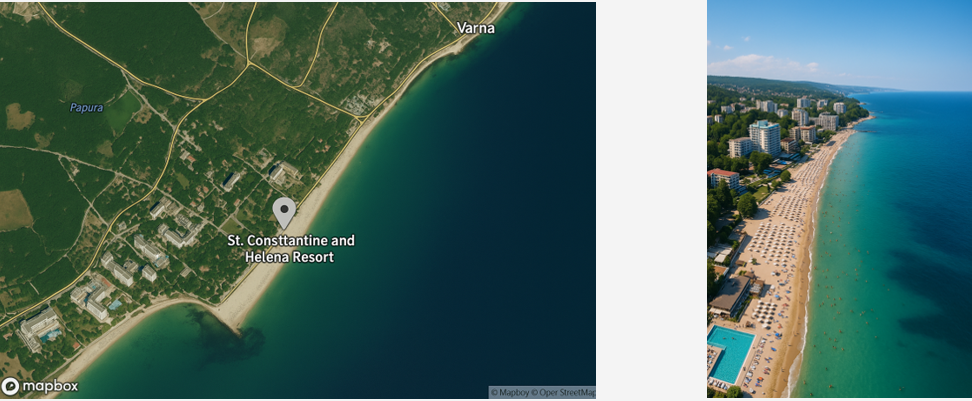
Located just 8 km north of the city of Varna, the historic seaside resort of Sts. Constantine and Helena represents one of the unique coastal destinations along the Bulgarian Black Sea coast.
Founded in 1908, it is considered the first official seaside resort in Bulgaria, combining natural beauty, cultural heritage and wellness traditions. Today, this destination is one of the pilot areas involved in the TOCAREMED Project, which aims to promote more sustainable and resilient tourism models in Mediterranean coastal areas.
A Unique Combination of Nature, Wellness and History
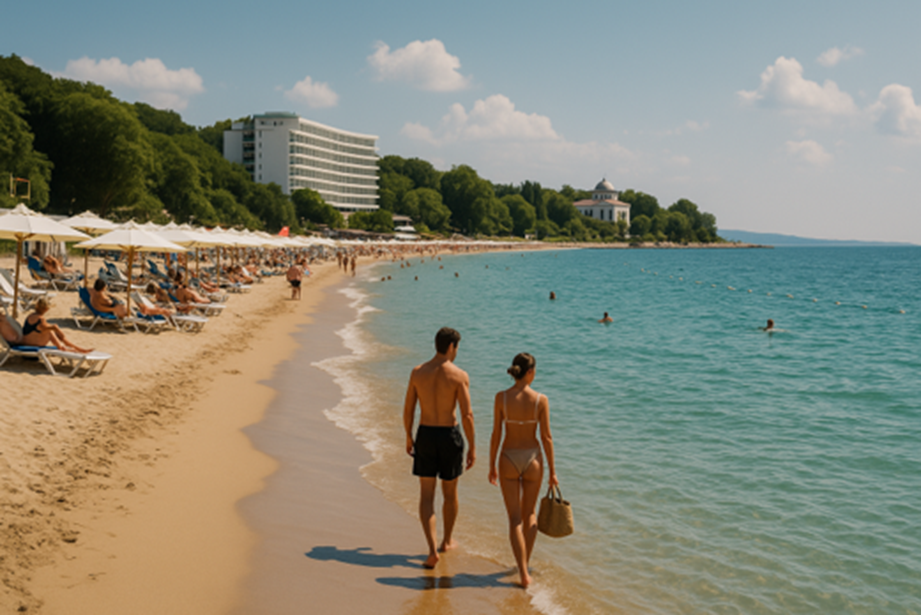
The resort extends over a natural marine terrace about 10–15 meters above sea level and features approximately 3.5 km of sandy beaches, surrounded by lush forests and green parks. Its mild climate—with warm summers and gentle winters—makes it a welcoming destination throughout the year.
One of its defining characteristics is the presence of seven mineral springs, with temperatures ranging from 40 to 60 °C. These calcium-magnesium waters have been used for therapeutic purposes for more than a century, making the resort an important centre for spa and wellness tourism.
The area also hosts important cultural and natural landmarks, including:
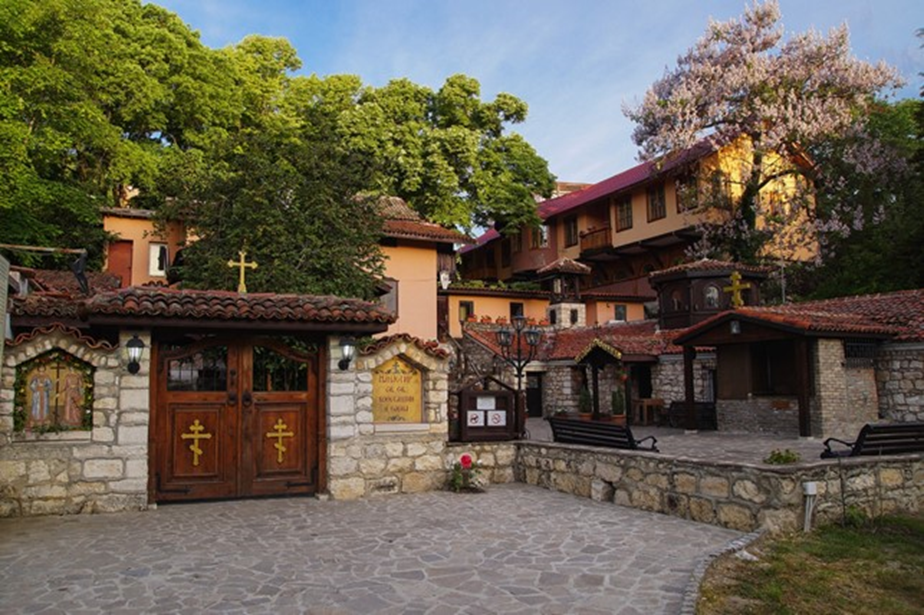
– the historic Monastery of Sts. Constantine and Helena, dating back to the 16th century
the elegant Euxinograd Palace and its renowned winery
the archaeological remains of the Kastritsi Fortress, linked to the Second Bulgarian Empire
the rich biodiversity of Ecopark Varna
Together, these elements create a landscape where nature, culture and wellness traditions coexist.
Fragilities and Challenges
Despite its unique assets, the destination faces several challenges that are common across many Mediterranean coastal areas.
Environmental pressures such as coastal erosion, marine pollution and seasonal waste accumulation threaten the fragile balance between tourism and nature. At the same time, seasonal tourism flows create pressure on infrastructure, including water management, waste systems and parking capacity.
Other key issues include the risk of heritage commercialization, limited promotion of historical landmarks and the need for a more diversified tourism model beyond the traditional “all-inclusive” offer.
Working Towards Sustainable Coastal Tourism
Through the TO CARE MED project, partners are working to identify innovative solutions and governance models that can help destinations like Sts. Constantine and Helena strengthen their resilience.
The project encourages collaboration between tourism stakeholders, environmental experts and public authorities to improve planning protect natural resources and promote more sustainable tourism
experiences.
By combining its rich cultural heritage, mineral springs and coastal landscapes, Sts. Constantine and Helena has the potential to become a model destination for sustainable wellness tourism in the Black Sea region.