
The TO CARE MED Project continues to advance a forward-looking vision of ecotourism, emphasising the need to balance environmental protection, community well-being, and economic development. Drawing on the International Ecotourism Society’s (TIES) definition of ecotourism, the project highlights “ethical travel to natural areas that conserves the environment and improves the well-being of local people.”
Yet, a key message emerging from the project is that ecotourism is not inherently sustainable. Without proper governance, it can exceed environmental carrying capacities, putting pressure on ecosystems and local communities. To address this, the project adopts the TCCL (Tourism Carrying Capacity Limit) methodology, a multidimensional approach that evaluates trade-offs across environmental, social, and economic dimensions.
A Living Landscape: The Unione dei Comuni Tifernum
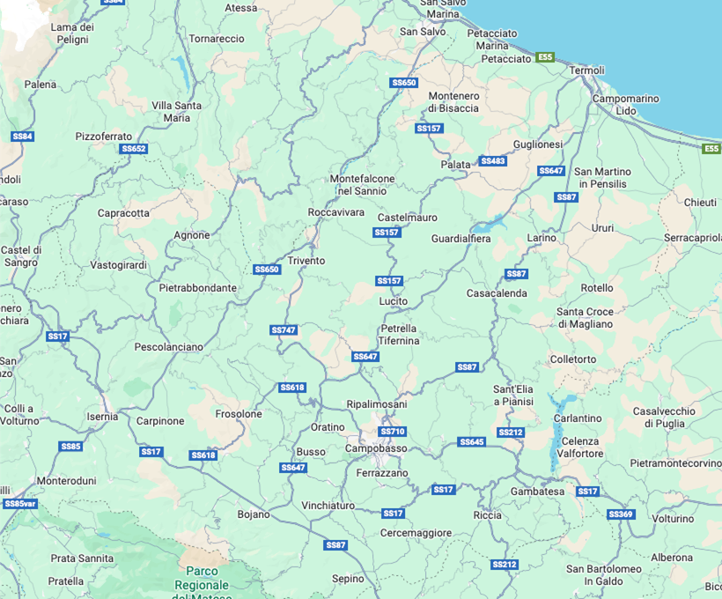
One of the case studies within the project is the Unione dei Comuni Tifernum, located in the Molise Region of Italy. This union brings together the municipalities of Petrella Tifernina, Castellino del Biferno, Matrice, Montagano, and Lucito, with a total population of approximately 4,500 inhabitants.
The area is unified by the Biferno River—known in Latin as Tifernum—which acts as both a geographical and cultural thread connecting these small inland communities. Rich in history, traditions, and gastronomy, the territory represents a unique blend of natural and cultural heritage.
Characterized by rolling hills, agricultural landscapes, forests, and Romanesque architecture, the region offers a cohesive and immersive tourism experience. The triangle formed by Petrella Tifernina, Montagano, and Matrice hosts some of the most important Romanesque sites in Molise, including nationally recognized monuments and spiritual landmarks.
Among them:
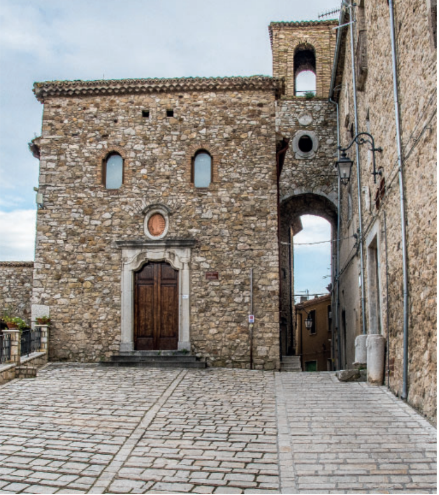
- The Church of San Giorgio in Petrella Tifernina, a national monument and a masterpiece of Romanesque symbolism
- The Abbey of Faifoli in Montagano, linked to Pope Celestine V
- The Church of Santa Maria della Strada in Matrice, an 11th–12th century artistic treasure
Culture, Traditions, and Experiential Tourism
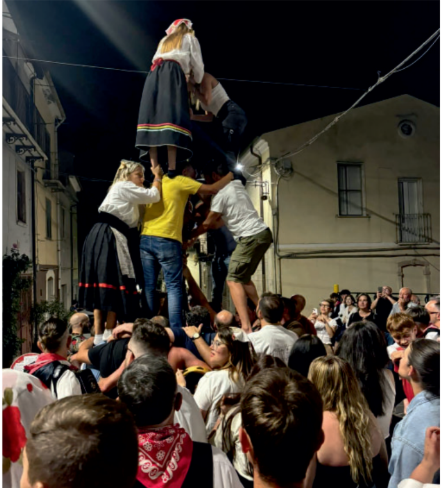
The Tifernum area stands out for its strong intangible heritage. Religious rituals, festivals, and traditional food practices play a central role in community life. Events such as the “U’ Pizzechentò” in Castellino del Biferno—a spectacular human pyramid performed during the feast of Saint Anthony—demonstrate the deep-rooted cultural identity of the region.
Local gastronomy further enriches the experience, from handmade pasta traditions to local specialities such as the Pomodoro di Montagano, a unique tomato variety cultivated using sustainable, biodiversity-friendly practices.
Visitors are invited not only to observe but also to participate—engaging with local communities, exploring historical paths, and discovering environmental trails that connect villages, forests, and ancient transhumance routes.
Accessibility and Connectivity
The “Romanic@mente in Cammino” itinerary, officially recognised among the Jubilee routes by the Italian Episcopal Conference, exemplifies the region’s commitment to accessible and inclusive tourism. It allows visitors to explore cultural and spiritual heritage while promoting slow mobility.
Strategically located, the Tifernum area offers easy access to broader destinations: Campobasso lies just 15 km away, while the Adriatic coast of Termoli can be reached in about 40 km. This makes Tifernum a gateway to the wider Molise region.
Challenges and Opportunities
Despite its strong potential, the area faces structural challenges:
- Limited transport infrastructure and weak connectivity
- Fragmented funding and lack of long-term planning frameworks
- Ageing population and youth outmigration
- Underutilised natural and recreational assets
Environmental fragility is also a concern, with insufficient maintenance of forest areas and limited monitoring systems.
Integration as a Strategic Approach
The TO CARE MED Project identifies integration as the key solution. Sustainable tourism development requires a holistic understanding of territories, considering the complex interconnections between nature, culture, economy, and society.
The project not only analyses these dynamics but also creates a dialogue, enabling stakeholders to exchange knowledge, share experiences, and co-design innovative solutions.
By fostering collaboration and improving planning strategies, the project aims to unlock the full potential of ecotourism—transforming regions like Tifernum into models of sustainable, inclusive, and resilient development.