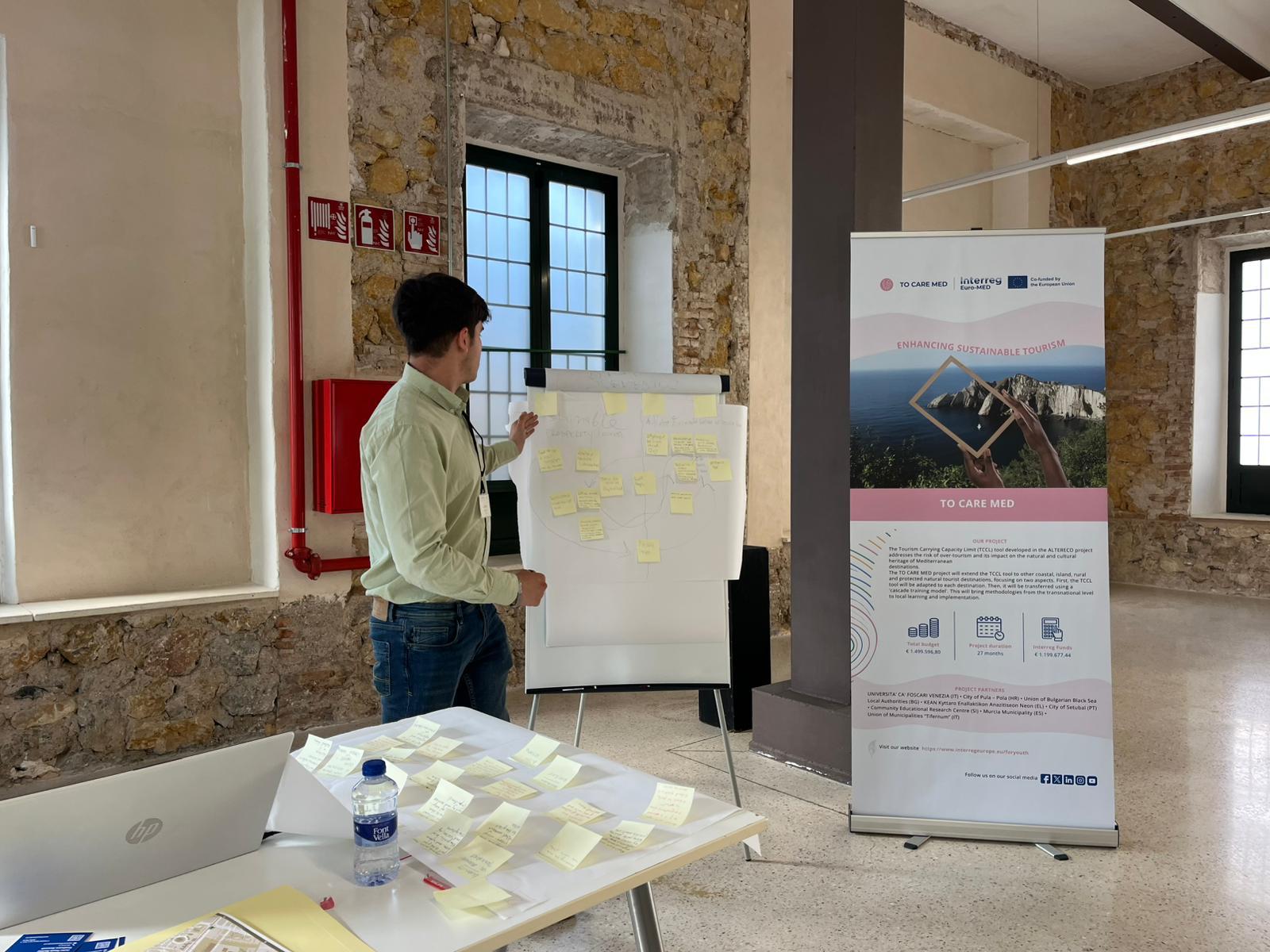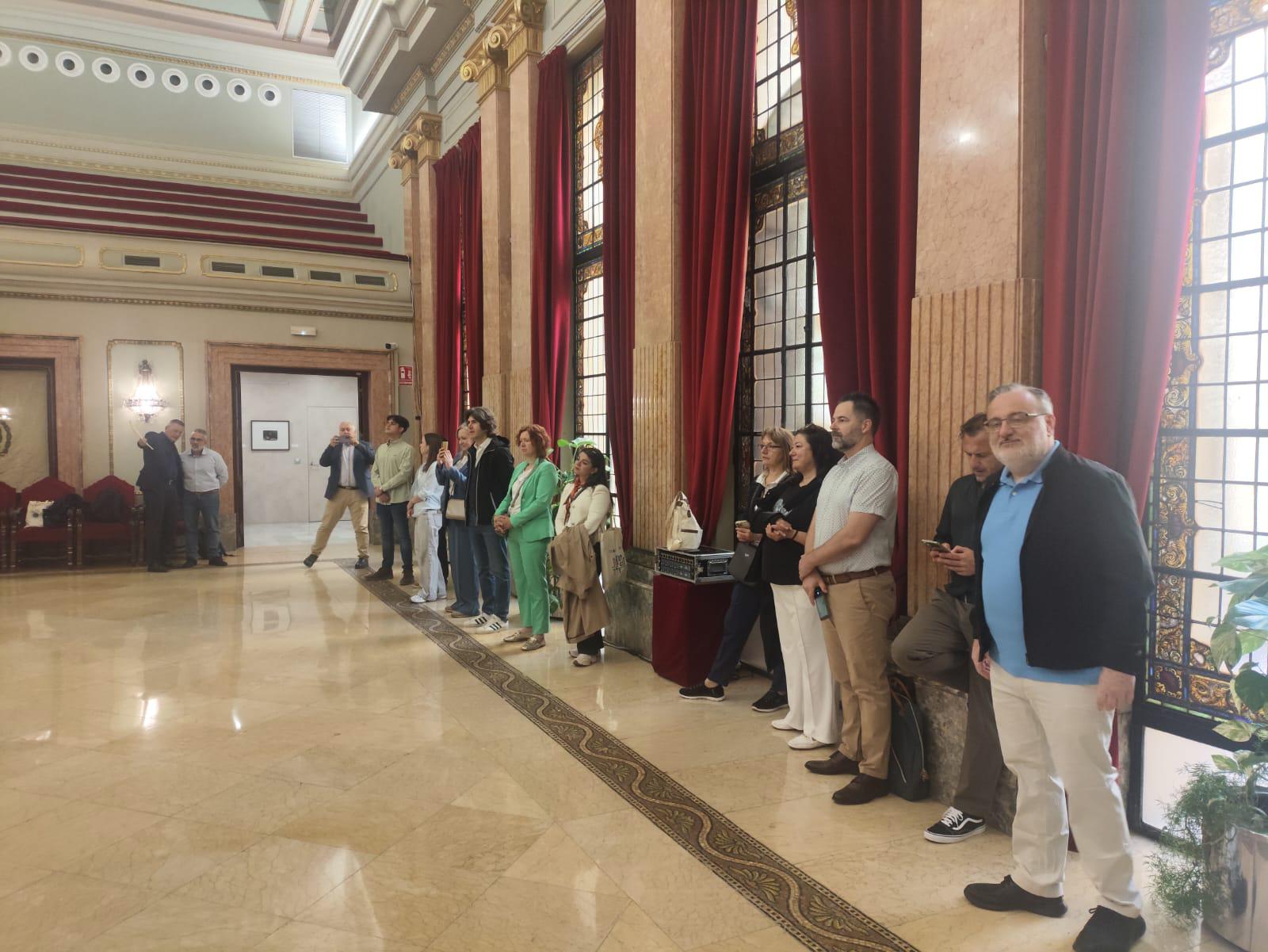

The TO CARE MED project — “Transferring Tourism Carrying Capacity Tool TO CARE about Sustainability of MED ecotourism strategies, plans, products and services” — successfully hosted its second transnational partner meeting in Murcia, Spain, from 22 to 24 April 2026, organised by the Ayuntamiento de Murcia.
The three-day event brought together project partners for an intensive programme of working sessions, field visits and strategic discussions focused on sustainable ecotourism across Mediterranean territories.
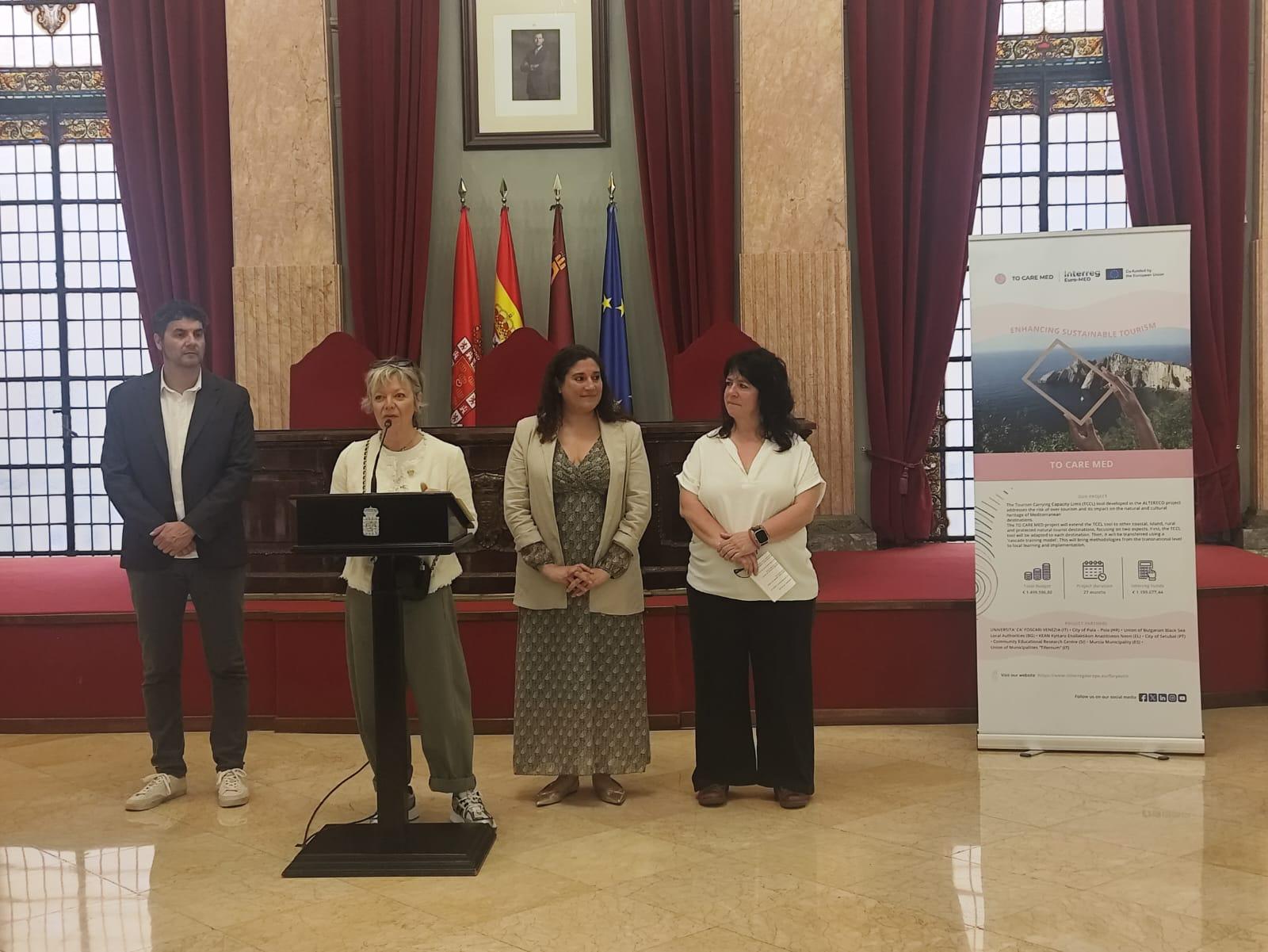
The meeting opened with an official welcome by the Mayor of Murcia, Mr. José Ballesta Germán, and Councilmember Ms. Sofía López-Briones Guil, followed by a keynote speech on sustainable ecotourism at the Cuartel de Artillería.
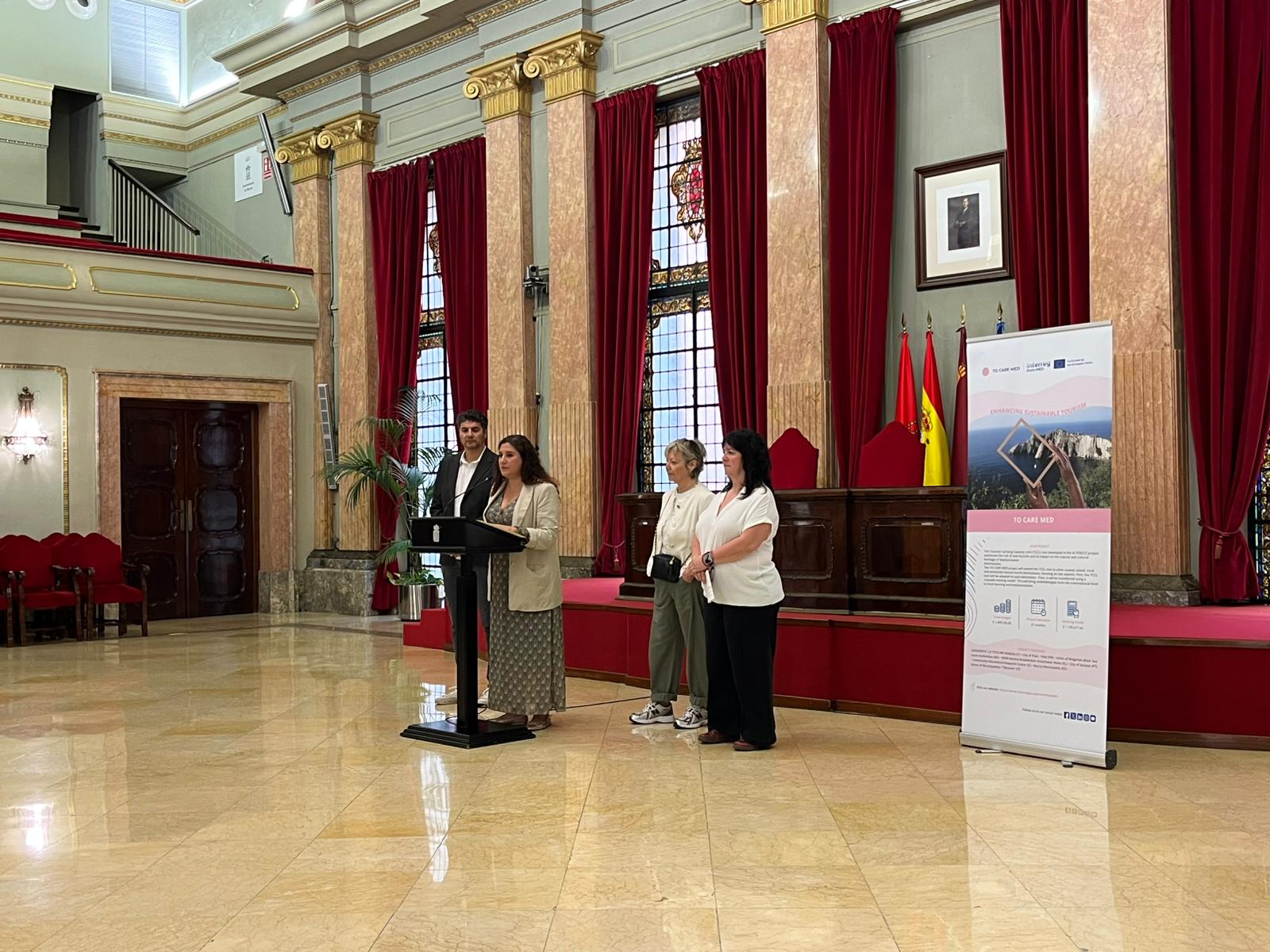
Opening remarks were delivered by Raffaella Lioce, Research Fellow at Ca’ Foscari University, who placed the project in its broader historical and scientific context. She recalled that the foundations of this work were laid as far back as 2014, through the TourMedAssets project, which established an observatory on tourism, later developed further under the ShapeTourism project. “Today, the challenge is to go beyond and develop scenarios based on quantitative analysis but looking at destinations as living systems, where tourism carrying capacity limits evolve and adapt to seasons, time, and demand,” she noted. Lioce emphasised the project’s ambition to combine quantitative analysis with qualitative perspectives, supporting strategic planning and seeing ecotourism as an opportunity both for developing Mediterranean destinations and for advancing research on sustainable tourism ecosystems.
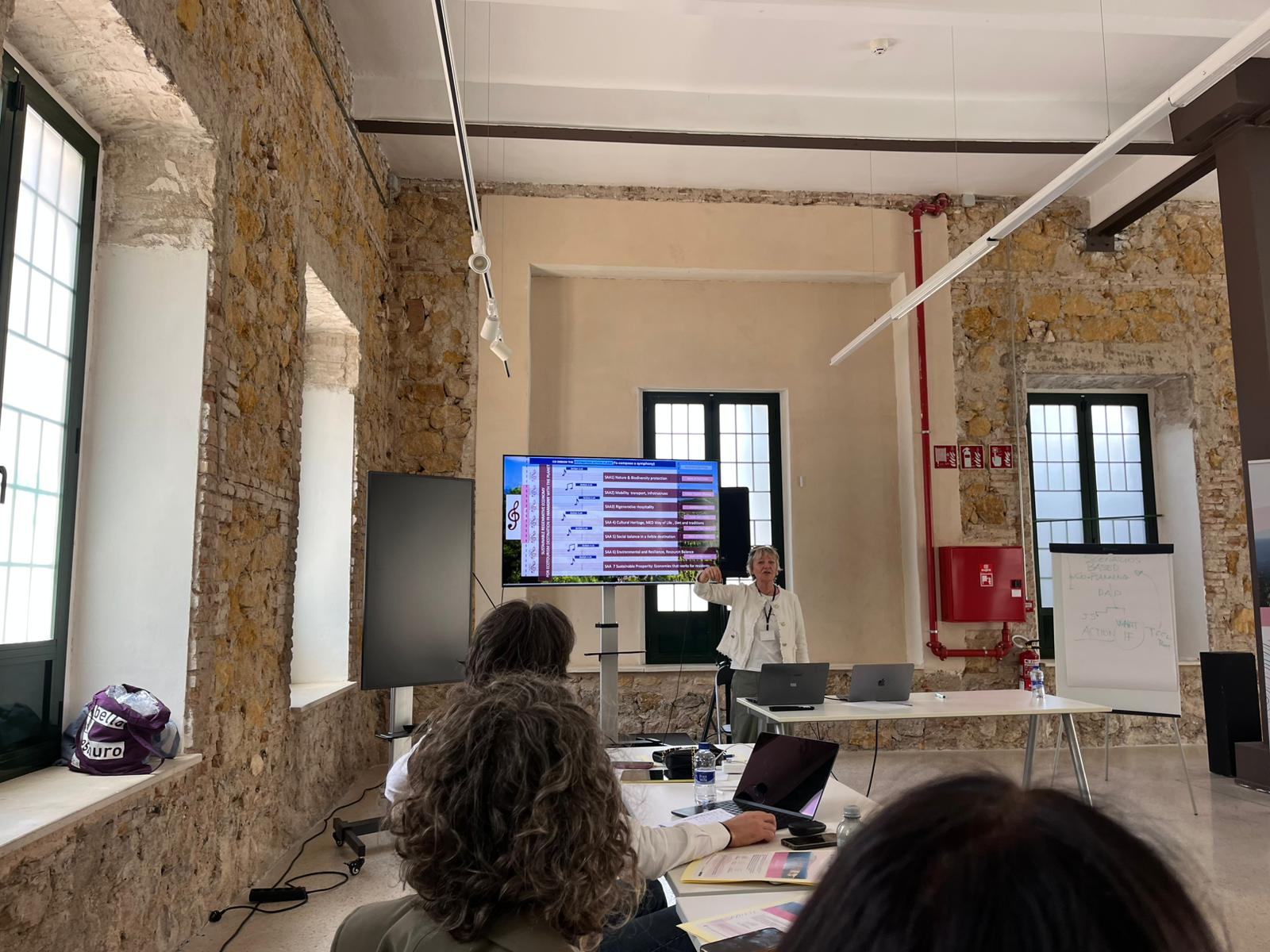
A central focus of the agenda was the Tourism Carrying Capacity Tool, developed by researchers from Ca’ Foscari University. Prof. Nicola Camatti and Raffaella Lioce presented both simulated and real-data scenarios, illustrating how the tool measures key subsystems — including mobility, accommodation, food and beverage, and visitor attractions — to assess the impact of tourism flows on a destination. Partners also explored strategies to improve data collection for the tool’s continued refinement.
On the second day, participants visited El Valle Carrascoy, one of the project’s pilot areas, gaining first-hand insight into the sustainability challenges facing natural spaces under tourism pressure. The visit informed a broader discussion on how to practically apply the project’s tools and strategies in real contexts.
Further sessions addressed tourism stream management in urban and peri-urban settings, heritage conservation and innovation, and the development of a Joint Strategy for Ecotourism, strengthening coordination among partner territories.
The meeting concluded with a review of results achieved to date and a shared commitment to greater harmonisation of ecotourism strategies across the Mediterranean region. Partners agreed on next steps and priorities ahead of the project’s upcoming phases.